Where History Lives: Part 16
WHERE HISTORY LIVES PART 16: the hudson river
The Hudson River is a 315-mile river in New York. The river is named after Henry Hudson, an Englishman sailing for the Dutch East India Company, who explored it in 1609, and after whom Canada's Hudson Bay is also named. However, it was first “discovered “ by the Italian explorer Giovanni da Verrazzano sailing for King Francis I of France in 1524. He was the first European known to have entered the Upper New York Bay.
Prior to the arrival of the Europeans, area around the Hudson River was inhabited by indigenous peoples. The Algonquins lived along the river, with the three subdivisions of that group being the Lenape (also known as the Delaware Indians), the Wappingers, and the Mahicans. The river was called Ca-ho-ha-ta-te-a ("the river") by the Iroquois, and it was known as Muh-he-kun-ne-tuk ("river that flows two ways") by the Mohican tribe. Read of all the Indian names for Hudson River here:
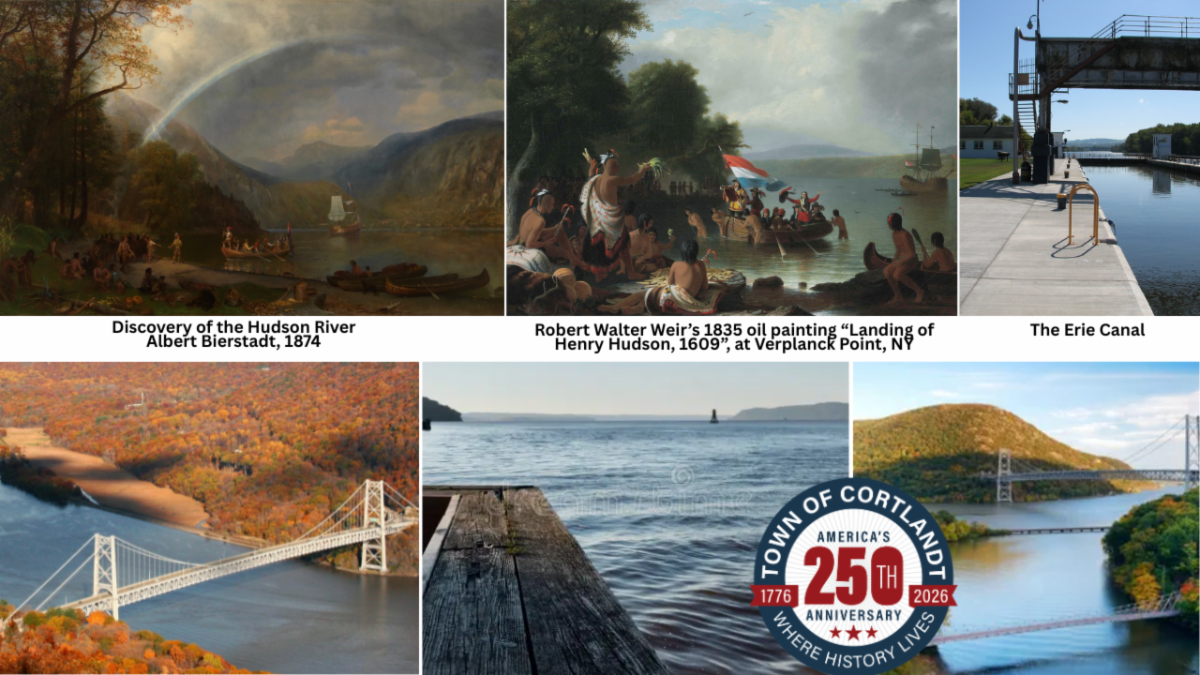
EXPLORATION: The first known European name for the river was the Rio San Antonio as named by the Portuguese explorer in Spain's employ, Esteban Gomez, who explored the Mid-Atlantic coast in 1525. Other names for the Hudson included: Manhattes rieviere "Manhattan River". The name North River was used up until the early 1900s. In 1598 some Dutch employed by the Greenland Company wintered at the mouth of the Hudson. Eleven years later, the Dutch East India Company financed English navigator Henry Hudson in his attempt to search for the Northwest Passage. During this attempt, Henry Hudson decided to sail his ship up the river that would later be named after him. As he continued up the river, he docked his ship on the western shore of Haverstraw Bay and claimed the territory as the first Dutch settlement in North America. He also proceeded upstream as far as present-day Troy before concluding that no such Passage existed there.
Richard H. Becker,
Supervisor
Read MORE:
SETTLEMENT: Henry Hudson realized that the Hudson River was not the Northwest Passage, the Dutch began examine the region for potential trading opportunities. They determined that the fur trade would be profitable in the region. As such, the Dutch established the colony of New Netherland. ] The Dutch settled three major outposts, including New Amsterdam which was founded at the mouth of the Hudson River, and would later become known as New York City. The British invaded the port of New Amsterdam. The Dutch Director-General Peter Stuyvesant was forced to surrender the city and the colony to the British. New Amsterdam and the overall colony of New Netherland was renamed New York, after the Duke of York.
REVOLUTIONARY WAR: The Hudson River was a key river during the Revolution. During Benedict Arnold's control over West Point, he began weakening its defenses, including neglecting repairs at West Point. At the time, Arnold was secretly loyal to the British, and planned to hand off West Point's plans to British major John André at Snedeker's Landing on the wooded west shore of Haverstraw Bay. On September 21, 1780, André sailed up the river on to meet Arnold. The next morning, an outpost at Verplanck's Point fired on the ship, which sailed back down river. André was forced to return to New York City by land; however, he was captured near Tarrytown on September 23 by three Westchester militiamen, and later was hanged. Arnold later fled to New York City aboard HMS Vulture.
INDUSTRIAL REVOLUTION: At the beginning of the 19th century, transportation away from the US east coast was difficult. In order to facilitate boat travel throughout the interior of the United States, numerous canals were constructed between internal bodies of water in the country. One of the most significant canals of this era was the Erie Canal, which connected the Great Lakes and the Hudson River. The Champlain Canal was built to connect the Hudson River to the southern end of Lake Champlain. This canal allowed boaters to travel from the St. Lawrence Seaway, and cities such as Montreal to the Hudson River and New York City
THE HUDSON RIVER PAINTERS: The artist Thomas Cole is generally acknowledged as the founder of the Hudson River School. Cole hiked west high up into the eastern Catskill Mountains to paint the first landscapes of the area. He found the brilliant autumn hues of the area to be inspirational. Cole's close friend, Asher Durand, and painters Frederic Edwin Church and Albert Bierstadt were the most successful painters of the school.
RECENT ECOLOGY: For decades starting in 1947, General Electric Company plants operating at Fort Edward and Hudson Falls dumped chemicals into the river, including more than a million pounds of toxic polychlorinated biphenyls, contaminants found to cause adverse health effects in humans and animals. In the 1960s, the River became a symbol for pollution because it was a dying river”. But the Hudson is a national successful example of recovery and a comeback story. In 1965, activists won a lawsuit recognizing the right of everyday citizens to protect the environment, and halted a power company from cutting into Storm King Mountain along the riverbank. The federal Clean Water Act of 1972 made it a crime for companies to discharge waste without a permit. From 2009 to 2015, conservation crews removed poisons from the riverbed, dredging sediment along a 200-mile swath that makes up one of the largest federal cleanup sites in U.S. history. And many species have made dramatic recoveries from the brink of extinction, including a resurgence of bald eagles and ospreys. Fish, including sturgeons, and birds such as great blue herons are back in good numbers.